
10 of the Sweatiest Movies Ever Made
Here in Boston, with a full month to go until Summer, we are experiencing our first heatwave of the year. With temperatures set to top 90 degrees Fahrenheit today, what better time to assemble a list of some of the sweatiest movies ever made.
This is not a list of best Summer movies, mind you, so you won’t find heartwarming delights such as ‘The Sandlot’. Instead, the following is a collection of the sweatiest, stickiest movies ever made, with actors sweating so much that you feel the heat even in the comfort of your air conditioned home.
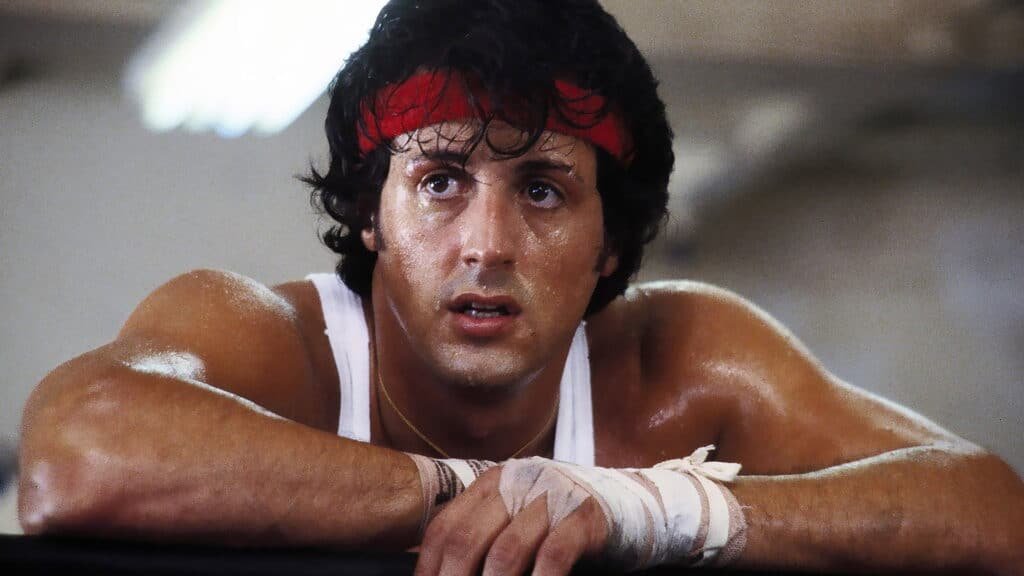
In putting together the following list of ten films, I’ve chosen to avoid all sports movies. While Rocky II, pictured above, may have more sweat by volume than any of these listed films, it feels like cheating to select a movie where people are working out to exhaustion.
Instead, the following list contains a range of movies where the heat is critical to the storytelling. Perhaps unsurprisingly, there aren’t a lot of feel good movies in this list, as we tend to associate high temperatures with higher tension, with oppressive heat making even the most calm among us quicker to anger, to murder.
This is by no means a comprehensive lists of sweaty movies, as I’m sure there are plenty I’ve either not seen or have forgotten. Interesting to note, I have no movies past the year 2000 on the list. In recent years it seems that sweat has all but disappeared from movies, with movie stars instead remaining unblemished and glamorous even in jungle settings. There are some exceptions of course – Ben Mendolsohn in ‘Killing Them Softly’ is more sweat than person – but the exceptions only stand to prove the rule.
Without further ado, here is a list of the sweatiest movies to get you through the hot days of Summer.
Rear Window (1954)
A voyeuristic murder mystery for when boredom sets in on one of those endless Summer days.
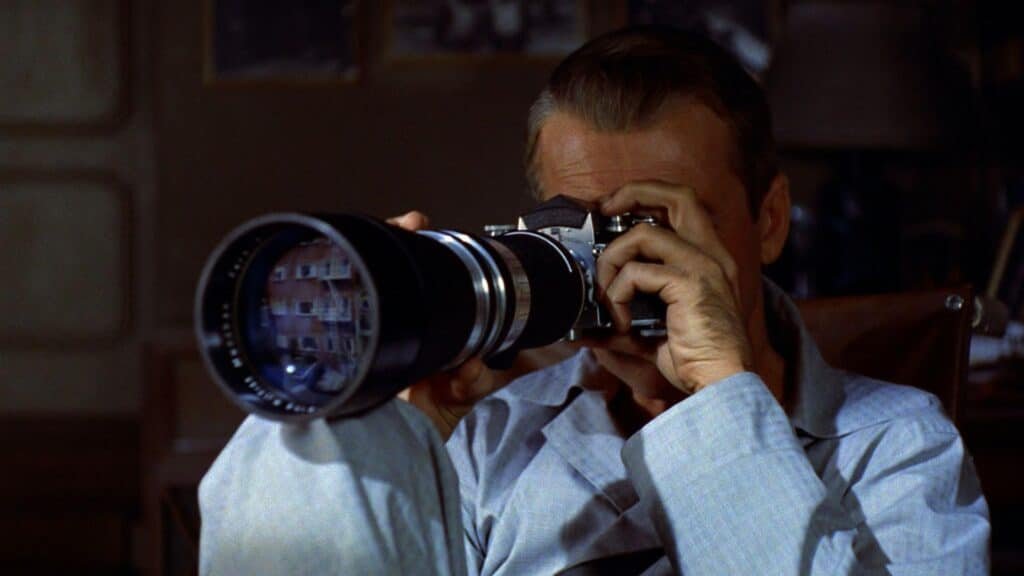
A photojournalist, L.B. Jefferies (James Stewart) finds himself confined to his apartment while recuperating from a broken leg and spends his hot, uncomfortable Summer days looking out his window, watching the comings and goings of all his neighbors. During one particularly sleepless night, Jefferies’ attention keeps being drawn to a domestic dispute between a husband and wife across the way and, after a series of unexplainable events, he begins to believe that the husband has killed the wife.
‘Rear Window’ takes place over a series of hot Summer evenings, with some neighbors going so far as to set up their mattress on their fire escape in search for brief respite from the oppressive heat. Like many old Hollywood films, ‘Rear Window’ shows a little reluctance with showing the less glamorous side of its movie stars, such that while Jimmy Stewart and his neighbors may sweat through the heat, Grace Kelly is presented looking as glamorous as anybody in human history.
All in, this is an Alfred Hitchcock masterpiece, offering a gripping thriller that moves with stunning pace given that it’s almost entirely confined to a single apartment. Speaking of single location masterpieces …
12 Angry Men (1957)
For those days when you’re stuck inside at work and the AC is broken.
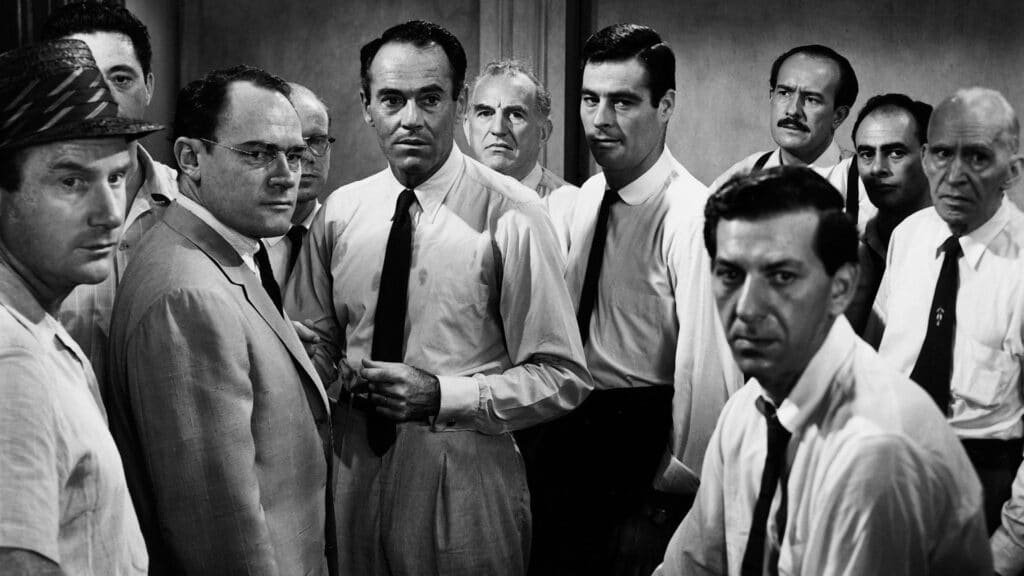
Taking place almost entirely in a single room, ‘12 Angry Men’ follows a jury deliberation in which eleven of the jurors believe the defendant to be guilty of murder, while Henry Fonda stands alone, forcing everybody to stay in a stifling room to discuss the case.
Throughout the movie, every character sweats and sweats and sweats and gets angrier and angrier. They all constantly pull out handkerchiefs to wipe themselves down, and when Jack Warden finally gets the fan working, it’s a brief moment of celebration. Where ‘Rear Window’ is a masterclass in direction, ‘12 Angry Men’ is a triumphant achievement in screenwriting, with Reginald Rose’s script somehow keeping the drama and tension sustained in a decidedly non-dramatic location, parceling out information deliberately such that the viewer will be constantly engaged, wondering how the case will possibly be decided.
Would these characters be at each other’s throats to the same level if it was a Winter day? Maybe, but the sweltering heat escalates the internal divisions and contributes to the film’s high tension even at such a small scale.
Cool Hand Luke (1967)
For when you’re stuck outside doing manual labor under a sun that won’t leave you alone.
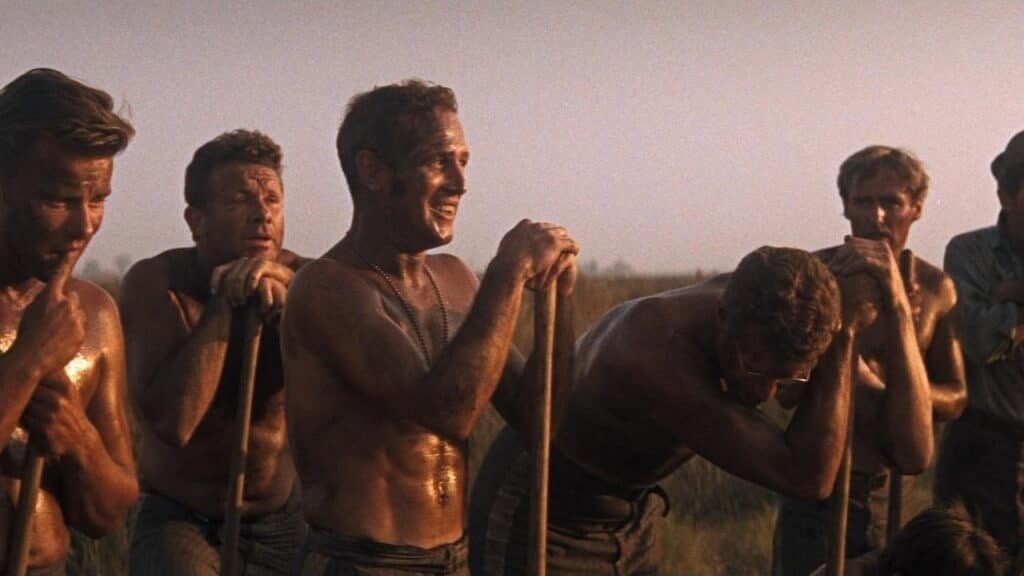
In one of his most iconic roles, Paul Newman stars as an anti-establishment hero who finds himself imprisoned and working on a chain gang in the Deep South. Luke and his fellow prisoners are constantly working at hard, manual labor under the oppressive Southern sun. Even in the lighter moments, the sweat is nonstop.
‘Cool Hand Luke’ is filled with memorable characters and set pieces: Luke’s David vs. Goliath fistfight with the hulking Dragline, a challenge on whether he can eat 50 eggs, a race to pave an entire road in less than a day. Through it all, Newman is charming, kind and defiant in the face of constant injustice while he forms friendships among his fellow prisoners who are all trying to survive a system that has written them off as lost causes.
As is the case with many movies on this list, the Deep South setting with its horrible humidity and worse corruption is critical to the story. ‘Cool Hand Luke’ is an emotional, tender and, yes, cool picture that wonderfully captures the revolutionary human spirit of the 1960s.
La Piscine (1969)
For when you’re stuck in paradise with people you don’t much care for.

France has heat too, believe it or not, and perhaps never more brutally captured than in Jacques Deray’s ‘La Piscine’. The plot follows a group of four on vacation together in the French Riviera and the jealousies inherent in their very French relationship dynamics. Jean-Paul is dating Marianne, who used to date Harry, who surprises everybody by bringing his secret eighteen year old daughter on their vacation.
The film plays out like a holiday from hell, wherein nobody seems to really like one another and the idyllic villa becomes more stressful than relaxing. While the tension is established early on, it’s never quite clear if or when these characters will lash out at one another. When the dynamics deteriorate too far, the film takes off in a new direction as the central couple must contend not only with the remains of their vacation, but with what happens next.
The Texas Chainsaw Massacre (1974)
For those sticky days where you just feel gross.
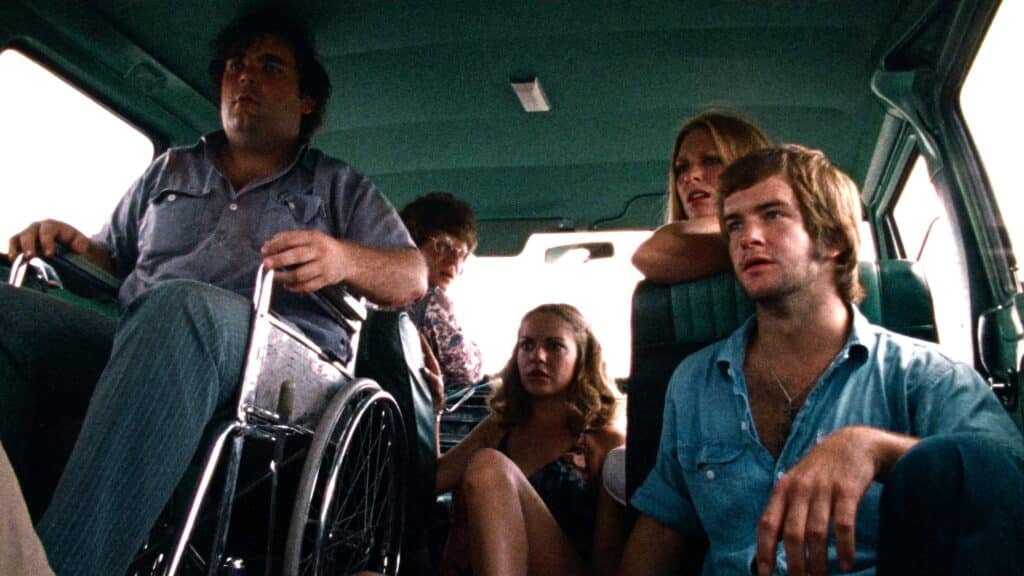
Tobe Hooper’s ‘The Texas Chainsaw Massacre’ is one of the most grotesque, uncomfortable independent horror features ever produced and stands apart from its peers due to its artful sense of place, of character. A group of carefree teenagers on a road trip through Texas find themselves confronted with all sorts of maniacs, including the cannibalistic Leatherface and his equally deranged family.
Everything about this movie is gross, even as the filmmaking is surprisingly beautiful. The people, the locations, the shocking violence all contribute to making this the cinematic equivalent of having nature detritus stick to your sweaty skin on particularly humid days.
Sorcerer (1977)
For when you’re stuck in Summer holiday traffic and need perspective on actually stressful driving.
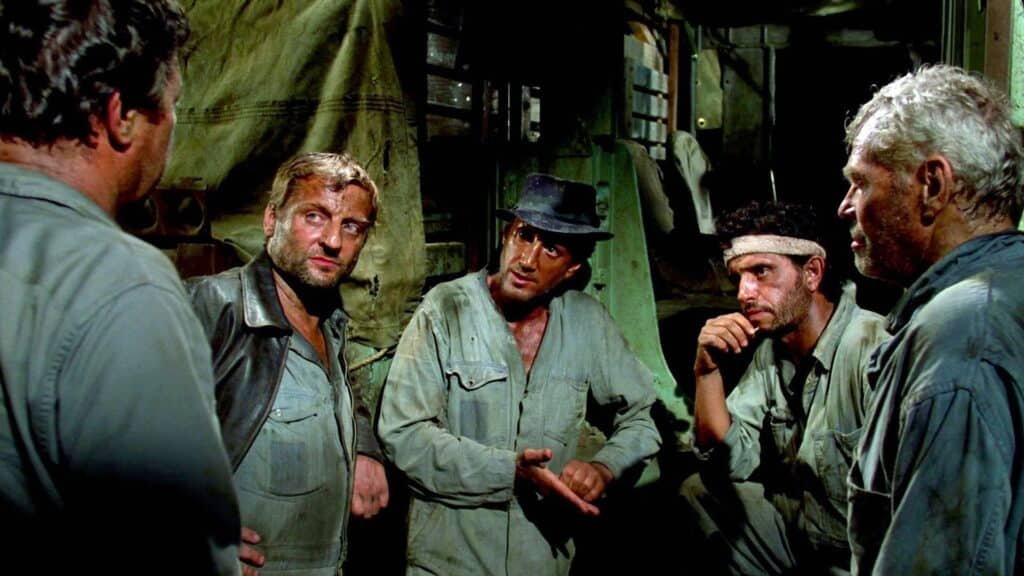
A remake of the also-great French film ‘The Wages of Fear’, ‘Sorcerer’ follows four desperate fugitives hiding out in South America who accept a dangerous job to drive truckloads of volatile nitroglycerin to an oil well. The nitroglycerin is decaying, sweating, and prone to explosion at the slightest jostling which is difficult to avoid on the rocky or nonexistent jungle roadways.
The driving is consequently slow and nerve-wracking, with each turn a chance for death. And if the job wasn’t fraught enough, the weather forces all of the drivers into a miserable existence filled with sweat and filth such that maybe death wouldn’t be so bad. ‘Sorcerer’, from the great director William Friedkin, is one of the most nonstop stressful films ever made, with hardly a single opportunity to breathe out in relief.
Apocalypse Now (1979)
For when you need reminding that it could always be worse, or at least weirder.
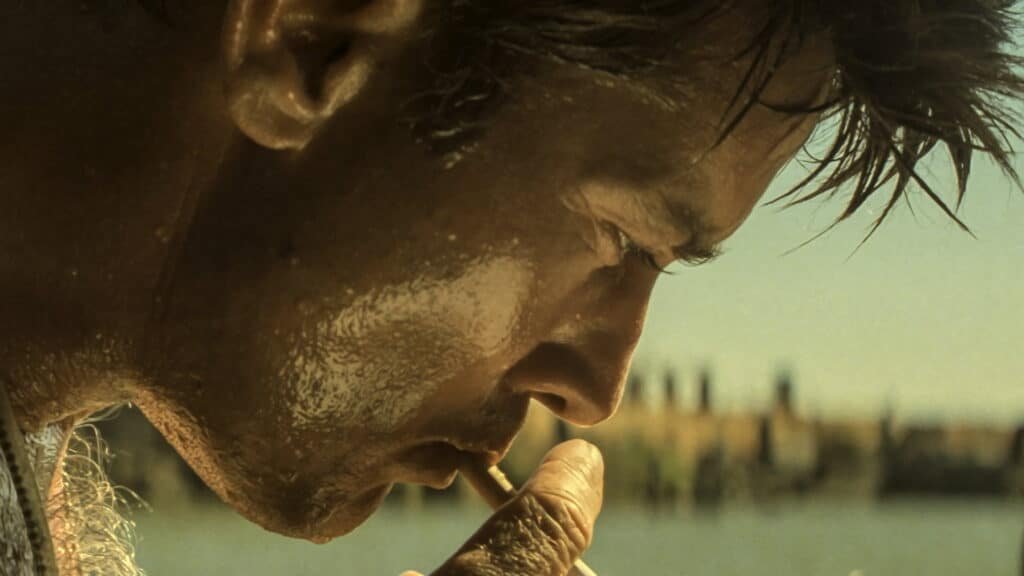
While a better entry may be the making-of documentary ‘Hearts of Darkness’, ‘Apocalypse Now’ is a sweat-drenched fever dream of a Vietnam War movie, careening through bizarre episodes as Martin Sheen’s protagonist wanders deeper into the maddening chaos of war in search of a lost soldier.
The Vietnam War has been Hollywood’s go-to conflict to document the horrors of war, with the jungle combat offering constant opportunities for physical and mental anguish. Martin Sheen’s man on a mission is almost unreadable when interacting with others, even as the viewer knows him to be suffering from PTSD. His journey is a kaleidoscopic odyssey into high strangeness as he meets characters as indelible as the gung-ho surfing enthusiast Bill Kilgore (Robert Duvall) and the object of his mission, the rogue Colonel Kurtz (Marlon Brando).
‘Apocalypse Now’ is unlike any other war movie ever made, a meditation on the inanity of combat that never shies away from moral complexity even as it presents heart-stopping set pieces.
Body Heat (1981)
For when the sun affects your basic cognitive abilities.

Multiple health studies have concluded that heat can affect the brain and dull thinking. Things that would make sense in normal weather are incomprehensible in high heat, and this is perhaps most accurately reflected in the convoluted plotting of 1981’s ‘Body Heat’.
Set in Southern Florida, Lawrence Kasdan’s film is like a 1940s film noir with the sweat and sex dialed up to eleven. While the film is best known for its erotic content – seriously, not a movie to watch with your parents – the crime, with all its twists and turns, feels inseperable from its climate.
Loosely inspired by ‘Double Indemnity’, here we follow an amoral lawyer played by William Hurt as he starts an affair with Kathleen Turner’s married femme fatale. The two lovers want to be together, but also want to profit from her husband’s fortune, so they conspire to kill her husband in such a way that the world will believe it to be an accident and all of the money will come to them.
‘Body Heat’ is a stylish neo-noir that remains potent due to its combination of movie star chemistry and stifling location work.
Do the Right Thing (1989)
For when you want to reflect on how much a powder keg America is.

Spike Lee’s ‘Do the Right Thing’ is perhaps the definitive cinematic portrayal of how tempers rise in the Summer, and how sudden violence transpires when the world feels at a boiling point. Set over the course of a single day, Spike Lee follows a wide range of characters in a Brooklyn neighborhood as they try to cope with everyday tensions and horrible weather.
Mookie, played by Spike Lee, works for the local Italian pizza joint in a predominantly black neighborhood and deals with all of the racial tension inherent in such an employer-employee dynamic. Rather than telling a linear story, Lee works instead in vignettes of different altercations, some violent and some humorous, capturing how disparate groups try to escape the boredom of their circumstances on an interminable day.
Despite presenting so many independent characters and plot threads, Spike Lee deftly weaves them all together and finishes with a climax that feels inevitable and all the more powerful for the time and attention given to the mundanities of an average Summer day in a working class neighborhood. With decades of work that justify his standing as one of cinema’s most bold, incisive voices, Spike Lee has never matched the effortless style and power of ‘Do the Right Thing’.
A Time to Kill (1996)
For when you want the racial consciousness of ‘Do the Right Thing’ but also want a boilerplate legal thriller.

A John Grisham adaptation set against the corrupt Mississippi justice system, ‘A Time to Kill’ is a powerhouse of 1990s legal dramas elevated by its star studded cast: Matthew McConaughey as a white savior lawyer, Sandra Bullock as a law student working for the defense, and Samuel L. Jackson as a defendant who decided to take justice into his own hands.
Beyond the big names, there is a smorgasbord of wonderful character actors, with practically every role filled with a that guy who you may not know their name, but you’ve seen them somewhere. All of this adds rich texture to an otherwise cheap legal thriller.
You can feel how still and stuffy the air in that courtroom must be, with Samuel L. Jackson’s prodigious sweating as the most visible cue. The suffocating weather perfectly heightens the sense of powerlessness in the face of a transparently biased society even as so many characters try to argue for common sense. ‘A Time to Kill’ is certainly not the best movie on this list, but it may just be the best Summer movie, the kind you throw on the TV and enjoy the moralizing entertainment because you don’t want to exert the mental energy to find something else.